URL Length Checker: Review Long Web Addresses Before Publishing
A URL length checker helps you review the size of a web address before you publish a page. It counts characters in the full URL and makes it easier to notice addresses that have become unnecessarily long. A shorter URL is not automatically a ranking advantage, but a clear and manageable address can be easier for people to read, share, remember, and work with. The checker provides a quick way to inspect the address before it becomes part of a website.
What Is a URL Length Checker?
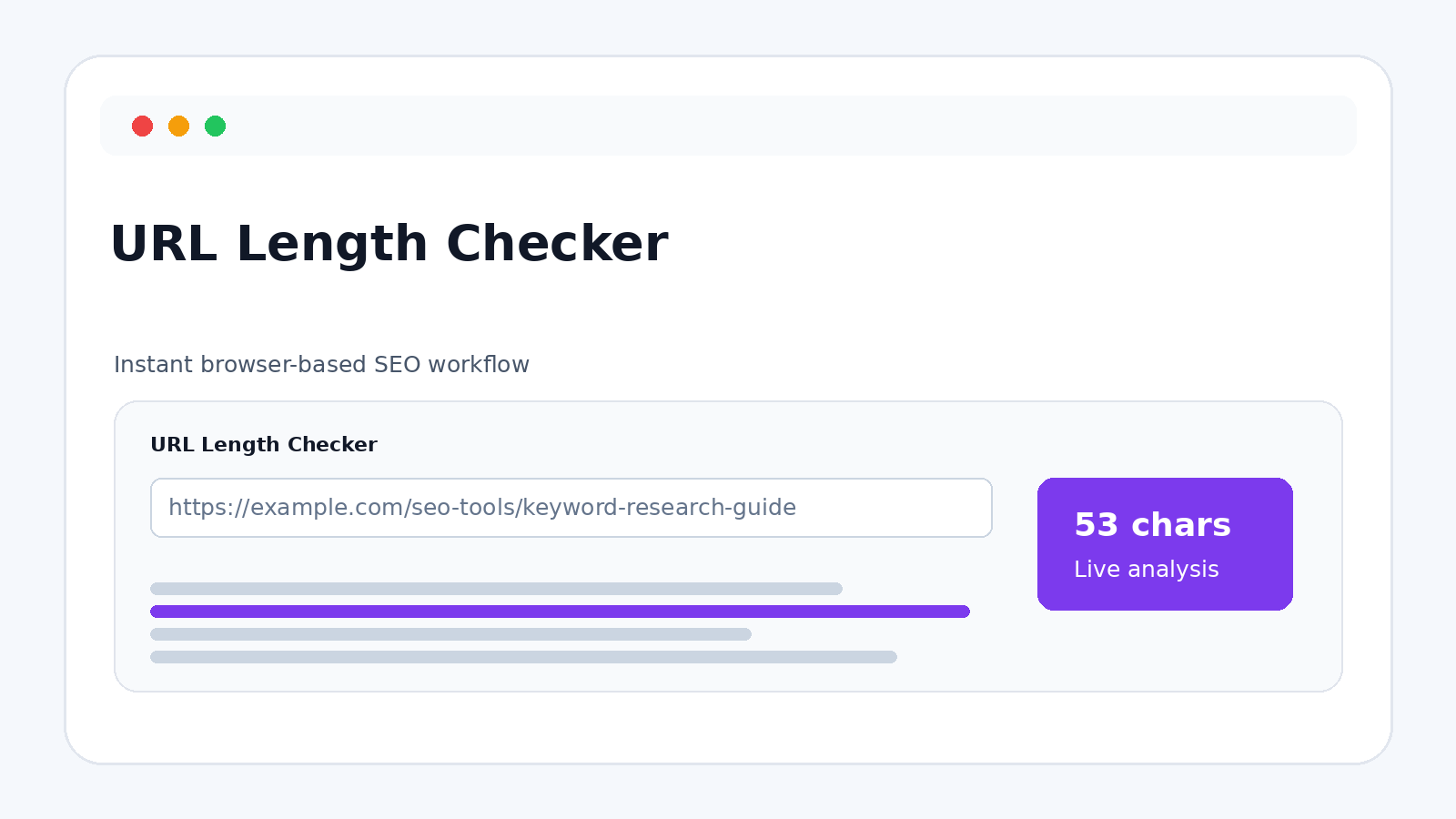
A URL length checker is a simple tool that measures the number of characters in a web address. You can paste a URL into the input box and see the count immediately. Some tools also break the address into its main parts, such as the domain, path, query string, or fragment. This makes the result easier to understand and can highlight unnecessary complexity.
Why URL Length Matters
Long URLs can become difficult to read, copy, remember, or communicate. They may also contain long tracking parameters, repeated folder names, or unnecessary words. A URL length checker does not decide whether an address is good, but it helps you spot when a page address has grown beyond what feels practical. This can be especially useful during site migrations, content planning, and technical audits.
How to Check a URL
Copy the full address and paste it into the checker. The tool counts the characters instantly. Review the result together with the structure of the URL. If the address is longer than necessary, look for repeated words, unnecessary parameters, or overly deep paths. Make changes carefully because changing a live URL may require redirects and can affect existing links.
Length Alone Is Not the Whole Story
A short URL can still be confusing, while a longer URL can be perfectly reasonable when it communicates useful information. The goal is not to make every address as short as possible. Instead, aim for a URL that is clear, stable, and easy to understand. Length is simply one signal. Relevance, consistency, and technical correctness matter too.
What Makes a Good URL Structure?
A practical URL usually reflects the subject or location of the page without unnecessary detail. Descriptive words can help visitors understand what they are opening. Clean paths are easier to scan than long chains of random parameters. Consistent naming also helps website owners manage large sites. The exact structure depends on the platform and project, but unnecessary complexity is rarely helpful.
Common Causes of Long URLs
Long URLs often come from deeply nested categories, repeated keywords, session identifiers, tracking parameters, filters, or automatically generated strings. E-commerce sites and large content systems can also create complex addresses when several filters are combined. A length checker can reveal the total size, but a technical review is needed to decide which parts can safely be simplified.
URLs and Website Maintenance
Changing an existing URL should never be treated as a simple text edit. Internal links, external links, bookmarks, redirects, analytics, and search engine signals may depend on the old address. When a shorter URL is needed, plan the migration carefully. Use the checker during planning to compare the old and proposed addresses before making changes.
Useful Features in a URL Checker
A helpful URL length checker should show the full count clearly and work with long strings without cutting them off. A copy button, clear control, responsive design, and readable output make the tool easy to use. Optional breakdowns for protocol, hostname, path, query parameters, and fragment can be useful for developers and SEO professionals.
Tips for Creating Cleaner URLs
Use descriptive words, avoid unnecessary repetition, and keep naming consistent across the website. Use stable structures that will still make sense if the page is updated later. Be careful with dynamic parameters and tracking strings. Before shortening a live address, check what depends on it. Good URL planning is easier than repairing a rushed change later.
A Fast Check Before Launch
A URL length checker is useful before publishing new pages because changes are much easier to make before an address is widely shared. Add the tool to a pre-launch checklist, review the length and structure, and then confirm that the final address is stable. The most useful goal is not an arbitrary character target, but a URL that remains understandable and technically reliable.
URLs on Content Sites and Tool Pages
Different websites need different URL structures. A blog may use a category and article path, while a tool site may place the tool name directly after the domain. The best structure is one that the site can maintain consistently. A URL checker is helpful when comparing alternatives because it makes the total size visible before a new address is committed.
When a Long URL Is Acceptable
Not every long address needs to be changed. Some systems use parameters for filters, sorting, language selection, or other necessary functions. A long URL can still be technically valid and useful. The important question is whether the extra characters serve a real purpose. Use the checker to identify size, then make changes only when there is a clear usability or maintenance benefit.