Slug Generator: Create Clean, Readable URLs From Any Text
A slug generator turns a page title or phrase into a clean URL-friendly slug. It can remove unnecessary symbols, convert letters to lowercase, and replace spaces with separators such as hyphens. This makes URL preparation much faster than editing every character by hand. A good slug should remain descriptive and readable while avoiding unnecessary words and formatting that can make web addresses harder to manage.
What Is a URL Slug?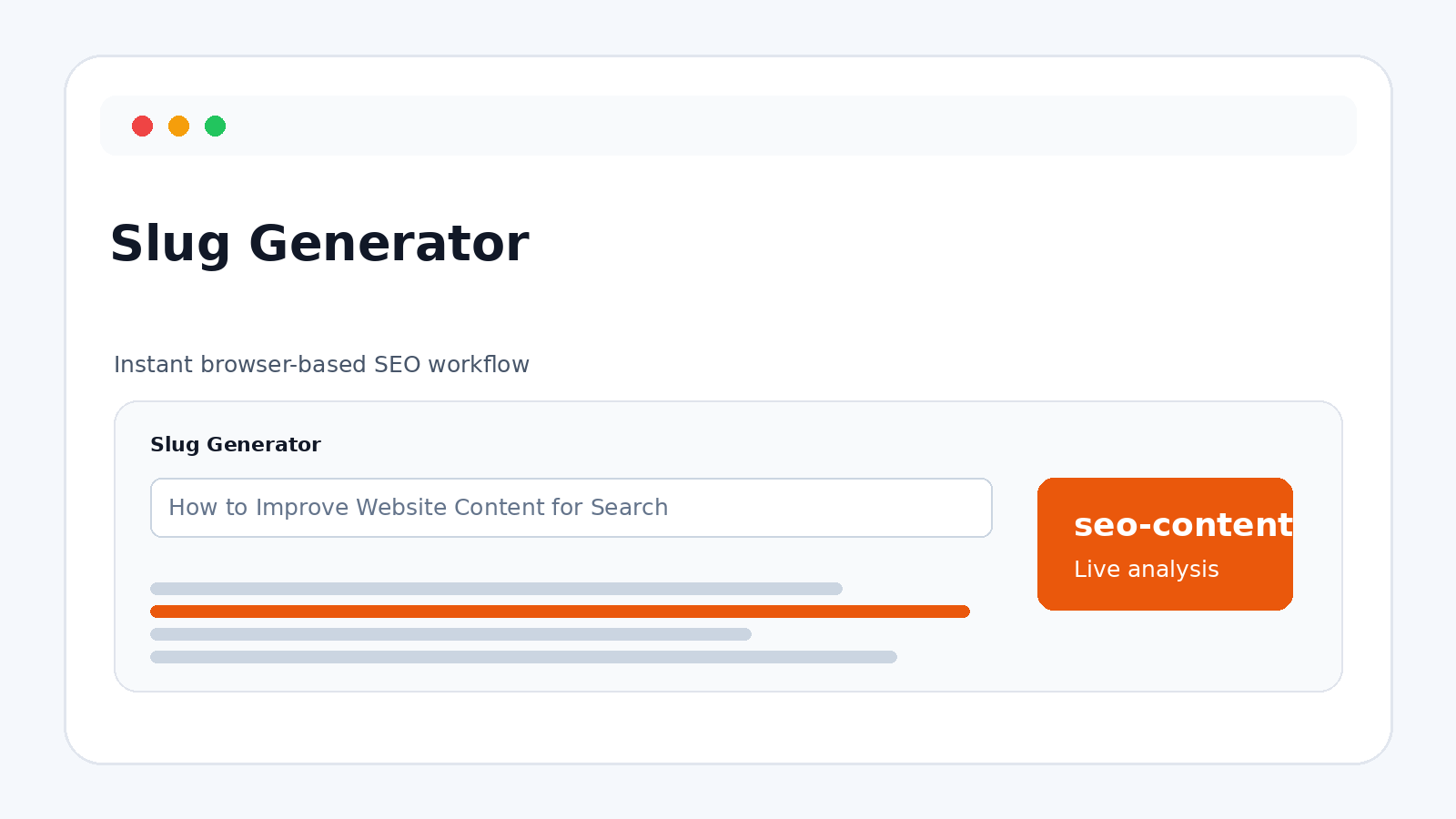
A URL slug is the readable part of a web address that usually comes after the domain name. It often identifies the subject of a page. For example, a page about image compression might use a short descriptive path instead of a long string of random characters. The exact URL structure depends on the website, but a well-formed slug usually favors simple, meaningful text.
What Does a Slug Generator Do?
A slug generator automates the formatting process. You enter a title or phrase, and the tool converts it into a URL-friendly version. Common operations include changing letters to lowercase, replacing spaces with hyphens, removing punctuation, and collapsing repeated separators. Some generators also remove common stop words or allow additional controls. The result can then be copied into a CMS or website editor.
How to Generate a Slug
Enter the page title or phrase into the input field and run the generator. The script processes the text and creates a clean slug. Review the output before publishing. Remove any words that do not help identify the page and make sure the result still describes the content accurately. A short review is especially important when the original title contains brand names, numbers, or technical terms.
Why Clean Slugs Are Useful
Readable slugs make a URL easier to understand. Someone looking at the address can often tell what the page is about without opening it. They can also be easier to share verbally and visually. Clean slugs help maintain a consistent site structure and can make content management more organized. The main benefit is clarity rather than a promise of a particular ranking effect.
Lowercase Letters and Hyphens
Most simple slug generators convert letters to lowercase and use hyphens to separate words. Hyphens visually divide words, making the resulting address easier to scan. Spaces cannot be used in URLs as ordinary spaces, so converting them to safe separators is a practical part of slug creation.
Handling Special Characters
Titles can contain punctuation, symbols, accented characters, emojis, or other content that does not belong in a simple web path. A generator usually removes or normalizes such characters. However, automatic handling can vary by tool and language. Always check the final slug, especially when the page contains names or terms that need special treatment.
Avoiding Overly Long Slugs
A slug does not need to repeat every word from the title. The goal is to identify the page clearly with as little unnecessary text as possible. Long slugs can become difficult to share and can create clutter. A generator helps with formatting, but the editor should still decide which words are actually useful.
Changing Slugs on Existing Pages
Creating a new slug for a page that does not exist yet is easy. Changing the slug of a live page requires more care. Old links can break unless a proper redirect is in place, and other parts of the website may still reference the old URL. Plan existing-URL changes as a technical migration rather than treating them as ordinary editing.
Useful Features in a Slug Generator
A practical generator should process text instantly, display the result clearly, and provide a copy button. Options for trimming repeated hyphens, removing extra spaces, preserving numbers, and handling Unicode characters can make the tool more flexible. A responsive design is important because titles are often copied from phones or content management systems.
Tips for Better Slugs
Use words that accurately describe the page, keep the structure consistent, and avoid unnecessary repetition. Think about whether the slug will still make sense months from now. Keep it easy to read and avoid changing a live address without a reason and a migration plan. A generator handles the mechanical formatting; thoughtful word selection remains the editor's job.
A Simple Way to Prepare URLs
A slug generator removes a repetitive technical step from publishing. Instead of manually replacing spaces, deleting punctuation, and checking every separator, you can create a clean starting point in seconds. Used as part of a content workflow, the tool makes URL preparation faster while keeping the final decision in the hands of the person publishing the page.
Why Slug Generators Are Useful for Publishers
Publishers often create many pages in a short period. Each page needs an address that is easy to manage, and repetitive manual cleanup creates avoidable work. A slug generator provides a consistent baseline for formatting titles. It is especially useful when titles arrive from spreadsheets, editorial systems, or drafts where spacing and punctuation are inconsistent.
A Good Slug Should Age Well
A page address is often kept for a long time, so it is worth choosing wording that will remain meaningful. Avoid temporary phrases that depend on a date or short-lived campaign unless that information is genuinely part of the page identity. A stable, descriptive slug can remain useful even when the article is updated. Good planning reduces the need for URL changes later.