Meta Title Length Checker: Create Clear SEO Titles for Better Search Visibility
A meta title length checker is a practical SEO tool that helps you review the size of a page title before publishing a webpage. It counts characters instantly and gives you a simple way to spot titles that may be too short, too long, or difficult to read. A length checker does not guarantee a specific search ranking or an exact display width, but it makes one important part of on-page optimization much easier: editing the title before the page goes live.
What Is a Meta Title Length Checker?
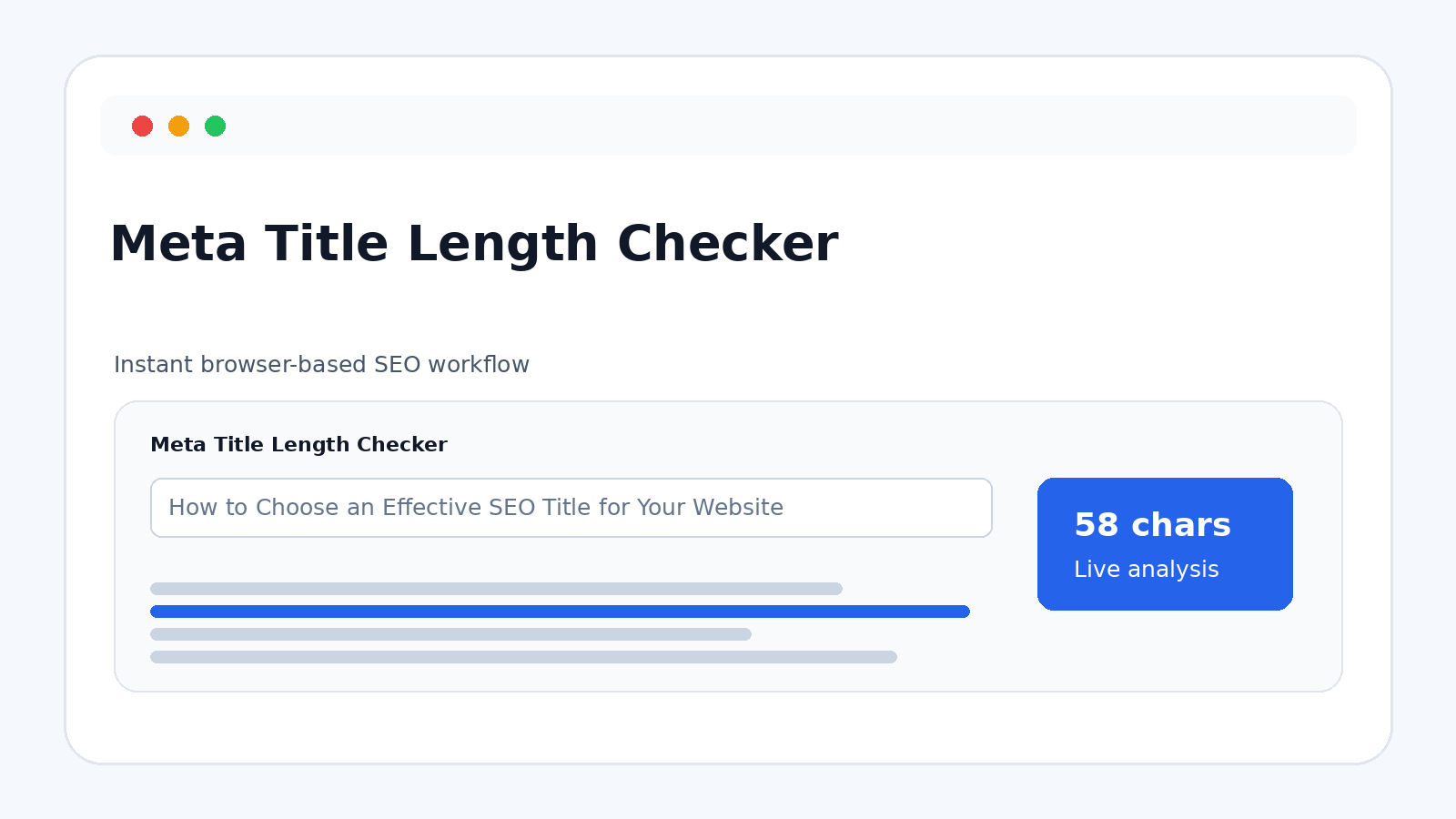
A meta title length checker measures the text used as a webpage title and reports its character count. Some tools also provide a visual range, a compact search-style preview, or warnings when a title becomes unusually long. The purpose is simple. Instead of counting characters manually, you can paste a draft into the tool and see the result immediately. This makes title editing faster for bloggers, publishers, business owners, developers, and anyone who regularly manages website content.
Why Meta Title Length Deserves Attention
The title is one of the first pieces of information people may see when a page appears in a search result. Search interfaces have limited space, so very long titles may not be shown completely. At the same time, an extremely short title may miss an opportunity to describe the page clearly. Length checking therefore works as a practical editing step. It helps you balance clarity, relevance, and compact wording before publishing.
How to Check a Meta Title
Using a title length checker usually takes only a few seconds. Enter the proposed title in the input box, and the tool counts the characters automatically. You can then remove unnecessary words, clarify the main subject, or move important information closer to the beginning. After editing, check the title again. Repeating this small cycle is much easier than trying to estimate the length by eye.
Character Count Is a Guide, Not a Guarantee
It is useful to treat character counts as a working guideline rather than an exact display rule. Search engines can change how titles are generated and displayed, and different characters take different amounts of visual space. The search query, device, and available interface width can also affect presentation. A checker is therefore most valuable as an editing aid. It helps you create a concise title without turning SEO into a rigid counting exercise.
What Makes a Useful SEO Title?
A strong page title should tell readers what the page is about quickly. It should be specific, natural, and closely connected to the actual content. Include the main topic in a way that sounds normal rather than repeating the same keyword several times. A clear title can be much more useful than one that is packed with search phrases but difficult to understand. Think about the reader first, then make sure the wording also fits the page's purpose.
Common Meta Title Problems
Titles often become ineffective because they contain unnecessary filler, repeated keywords, vague wording, or claims that the page does not support. Another common problem is using the same generic title pattern across many pages. A length checker can reveal when the wording is too large, but it cannot decide whether the title is useful. The final review should consider accuracy, uniqueness, readability, and how well the title matches the page.
Using a Title Checker in an SEO Workflow
A title checker fits naturally into a content production process. Write a first draft, paste it into the tool, review the character count, refine the wording, and then add the final title to the page. Content teams can use the same process for articles, category pages, product pages, and landing pages. Because the checking step is fast, it can be built into an editorial checklist without adding much work.
Useful Features in a Meta Title Checker
A practical checker should make the main task obvious. A large input field, live character count, clear status indicator, copy button, and responsive layout are usually enough for everyday use. A preview can be useful as an additional visual aid, especially when it shows how the title may look in a search-style result. Client-side processing is another useful feature because a simple character-counting task can be performed directly in the browser.
Tips for Writing Better Titles
Start with the real subject of the page and remove words that do not add meaning. Keep the title readable when spoken aloud and avoid awkward keyword placement. Make important context visible early when possible. Check that each page has a title that is meaningfully different from other pages on the site. Most importantly, make sure the title accurately represents the content that follows it.
A Simple Tool That Saves Repetitive Work
Meta title editing is a small task that becomes tedious when repeated across dozens of pages. A length checker automates the counting part so you can spend more time improving the wording. Used alongside normal editorial judgment, it provides a practical and lightweight way to prepare cleaner page titles. The best workflow is not to chase a number, but to use the number as one useful signal while keeping relevance and readability at the center.
Meta Titles for Different Types of Pages
The right wording can vary depending on the page. An informational article can put its main subject near the beginning, while a service page may explain the service and its audience more directly. A product page may need the product name plus a useful identifying detail. Looking at the page type before writing the title keeps the result focused and reduces generic wording.
Review the Title From a Reader's Perspective
After checking the character count, read the title without thinking about SEO for a moment. Ask whether a person could understand the page topic from the title alone. Remove words that sound repetitive or vague, and make sure the promise in the title is supported by the content. A concise, accurate title is easier to trust and easier to maintain over time.